
Interior Vs Exterior Waterproofing
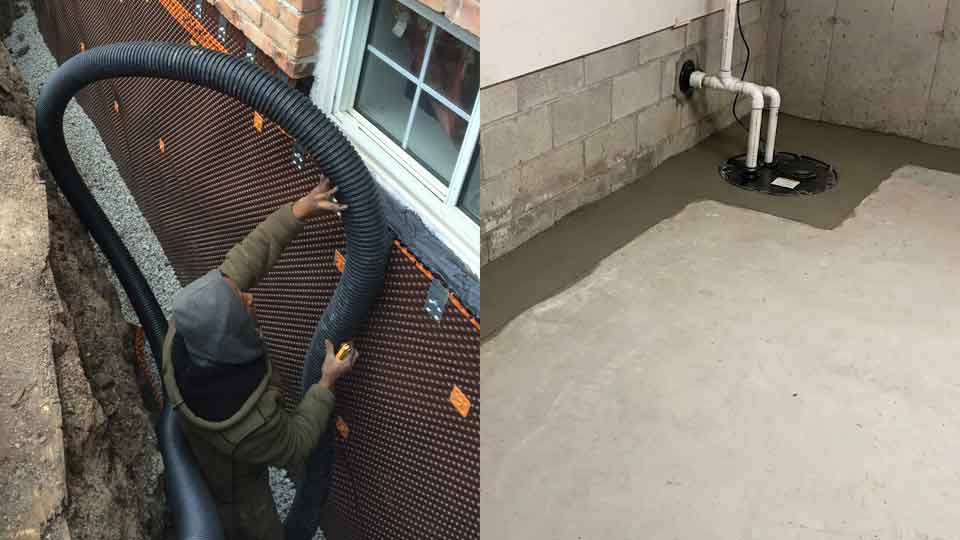
In the worlds of basement protection there are two heavy hitters: Interior and Exterior waterproofing. One stops the water from entering entirely, while the other manages it once it gets through. Let’s break down which one actually earns its keep for your specific home.
Exterior Waterproofing: The “Armor” Approach
Think of exterior waterproofing as a raincoat for your foundation. It’s a proactive method designed to stop water from ever touching your basement walls in the first place.
How it Works: This process is heavy-duty. It involves excavating the soil around your foundation down to the “footing” level. Once the walls are exposed, they are cleaned, repaired, and sealed with a high-grade waterproof membrane and drainage board.
The Pros and Cons
- Pros: Stops water before it enters the concrete.
- Protects the structural integrity of the foundation.
- Does not require moving furniture or tearing up your basement floor.
- Cons: Significantly more expensive due to excavation.
- Disrupts landscaping, driveways, or decks.
- Weather-dependent (you can’t dig a trench in a blizzard)
Interior Waterproofing: The “Management” Approach
Interior waterproofing is technically a drainage system. Rather than stopping the water, it accepts that the water is coming and gives it a controlled path out of the house.
How it Works: A channel is carved into the perimeter of your basement floor. A perforated pipe (often called a French drain) is installed and covered with gravel and new concrete. When water seeps through the walls or up from the floor, it falls into this pipe and is directed to a sump pump, which shoots it safely away from the house.
The Pros and Cons
- Pros: Much more budget-friendly than exterior work.
- Can be installed in any weather.
- Relieves “hydrostatic pressure” (water pushing up from under the floor).
- Cons: The foundation walls still technically get wet.
- Requires a sump pump (which needs a battery backup in case of power outages).
- Involves dust and noise inside your living space during installation.
Which One is Best?
When it comes to Interior vs. Exterior waterproofing, it comes down to a balance of permanence, budget, and accessibility.
You should opt for exterior waterproofing if you are currently building a new home, as it allows for proactive protection. It is also the necessary choice if you are dealing with severe foundation wall deterioration or if you simply want the most “permanent” solution available to keep the structure dry.
Conversely, interior waterproofing is the way to go if you are working with a limited budget or if the water is rising up through the floor rather than just seeping through the walls. It is also the most practical “management” solution when your exterior access is physically blocked by a neighbor’s house, a deck, or a paved driveway.
How We Can Help.
Upon contacting Dry-Rite Waterproofing, we will use advanced diagnostic tools to identify hidden moisture and structural issues that standard observations might miss. Beyond the walls, we will analyze soil composition, yard grading, and water table levels to address environmental causes such as hydrostatic pressure.
Our expertise will distinguish between minor settling and severe structural threats like foundation bowing, ensuring that permanent solutions like wall anchors are applied when necessary.
Remember, Dry-Rite offers free inspections. If your basement is showing signs of trouble contact us. We will be more than happy to look into any foundation issue you may be having.
